The single biggest time waster in Indian B2B sales is chasing leads that were never going to buy. Sales reps spend hours calling, emailing, and following up with prospects who fit none of the criteria of a qualified buyer. Meanwhile, genuinely interested, high-intent leads wait too long for follow-up and close with a competitor. Lead scoring solves this problem by ranking every lead in your pipeline based on their likelihood to convert, so your Indian sales team focuses their energy where it will pay off.
AI-powered lead scoring goes further than traditional rule-based scoring by identifying patterns in your historical conversion data that human intuition misses. An AI model trained on your own Indian customer data will learn that leads from certain industries convert at 3x the average rate, that leads who visit your pricing page within 24 hours of a sales email are 5x more likely to schedule a call, and that company size combined with job title is a stronger predictor than either factor alone. These multi-variable insights are impossible to capture with simple manual scoring rules.
The Difference Between Rule-Based and AI Lead Scoring
Traditional lead scoring assigns fixed points to characteristics: +10 for "Director or above" job title, +15 for "100+ employee company," +20 for visiting the pricing page. You add up the points and score leads as Hot, Warm, or Cold. This works, but it is based entirely on human assumptions about what matters and cannot adapt as your Indian customer profile evolves.
AI lead scoring (also called predictive lead scoring) builds a statistical model from your historical CRM data — specifically, what did closed-won leads look like versus closed-lost or unconverted leads? The model identifies which combinations of characteristics and behaviours were actually predictive of conversion in your specific Indian market, regardless of what you assumed mattered. The result is a continuously improving score that adapts as your conversion data grows.
Data Required for AI Lead Scoring in India
AI lead scoring requires sufficient historical data to train a reliable model. At minimum, you need 300-500 historical leads with conversion outcomes (converted or not) and multiple data points about each lead. The more data you have, and the more variables per lead, the more accurate your model will be.
Relevant data for Indian B2B lead scoring includes: firmographic data (company size, industry, city, years in business, funding status for startups), demographic data (job title, seniority level, LinkedIn connections, previous companies), and behavioural data (website pages visited, emails opened and clicked, content downloaded, form fills, webinar attendance, CRM interaction history). Companies with at least 12-18 months of CRM data typically have sufficient volume to train a meaningful predictive scoring model.
AI Lead Scoring Tools Available in India
| Platform | AI Scoring Feature | Best For | Pricing (INR/month) |
|---|---|---|---|
| HubSpot CRM | Predictive lead scoring (Pro+) | B2B startups, mid-market | 3,600 - 36,000 |
| Salesforce Einstein | Einstein Lead Scoring | Enterprise Indian companies | Custom (high) |
| Zoho CRM Plus | Zia AI predictions | Indian SMEs, affordable | 2,800 - 8,000 |
| Freshsales | Freddy AI scoring | Growing Indian sales teams | 1,199 - 5,999 per user |
| Leadsquared | AI scoring + India-specific features | Indian B2C and B2B companies | Custom |
Setting Up AI Lead Scoring: Step by Step for Indian Sales Teams
Step 1 is data cleanup. Before training any AI model, your CRM data must be clean. Duplicate leads, missing fields, and inconsistently entered data will produce unreliable scores. Spend 2-4 weeks auditing and cleaning your CRM before enabling AI scoring — this investment pays back multiple times in model accuracy.
Step 2 is defining conversion. Tell your AI model what a conversion looks like in your Indian business. Is it a closed deal? A qualified demo scheduled? A proposal sent? Different definitions produce different scoring models. Align with your sales leadership on what milestone the AI should predict before enabling the model.
Step 3 is enabling the AI model. In HubSpot, Zoho, or Freshsales, this is typically a toggle in settings once you have sufficient data. The platform will train the model on your historical data and begin assigning predictive scores to active leads. Step 4 is testing. Compare the AI score to your existing intuitive scoring for a month before fully trusting it — validate that high-AI-scored leads are actually converting at higher rates before reorganising your entire sales process around the scores.
Step 5 is acting on the scores. Configure your CRM to automatically alert sales reps when a lead score crosses a threshold (e.g., score above 80: immediate phone follow-up required within 2 hours). Build automated email nurture sequences for medium-score leads that are not yet ready for sales contact. This systematises your Indian sales team behaviour based on AI intelligence rather than individual gut feel.
For more on building effective sales and marketing systems, read our guide on digital marketing strategy for small businesses in India and our content marketing strategy guide.
Frequently Asked Questions
How many leads do I need before AI lead scoring works for my Indian business?
Most AI lead scoring platforms require at least 200-500 historical leads with conversion outcomes to train a reliable model. If you have fewer leads, start with rule-based scoring and collect data systematically. Plan to enable AI scoring after 12-18 months of organised CRM usage, by which time most Indian B2B companies will have sufficient data volume for meaningful predictive models.
Can AI lead scoring work for Indian B2C businesses?
Yes, though the variables differ. B2C lead scoring in India uses behavioural data (website visits, app usage, email engagement), purchase history, and demographic data rather than firmographic variables. Indian B2C platforms in fintech, edtech, and health insurance use AI scoring extensively to prioritise outbound sales calls to leads most likely to convert, reducing call volume while increasing conversion rates.
What if my Indian sales team does not trust the AI scores?
Sales team adoption is the biggest challenge in AI lead scoring implementation. Address this by: showing them the accuracy data (how often do high-scored leads actually convert?), involving senior sales reps in the scoring model review, running a 30-day pilot where they can work both with and without scores and compare outcomes, and celebrating early wins where following AI scores led to better results than intuition alone. Trust builds through demonstrated accuracy, not through mandate.
How often does an AI lead scoring model need to be retrained for Indian market conditions?
Most enterprise AI lead scoring platforms retrain their models automatically as new conversion data flows in. For smaller Indian businesses using simpler tools, quarterly review of your scoring model against actual conversion rates is recommended. If market conditions change significantly — a major competitor exits, a new regulation changes buying patterns, or your ICP shifts — manual review and reconfiguration of the model criteria may be needed sooner.
Should AI lead scores replace sales rep judgment for Indian enterprise deals?
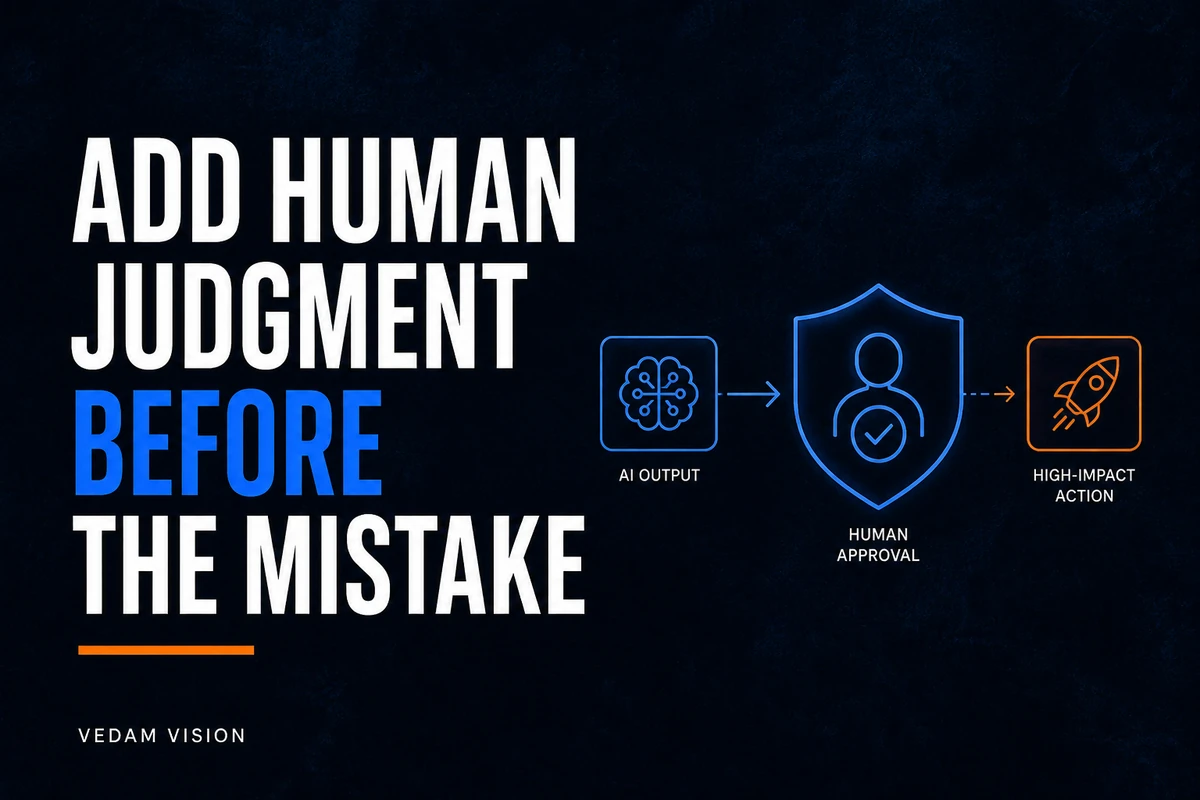
No. AI lead scoring is a guide for prioritisation, not a replacement for experienced sales judgment in Indian enterprise deals. The AI may score a lead highly based on company size and website behaviour, but a senior sales rep who knows the company is currently in a leadership transition or facing budget cuts has contextual knowledge that the AI model cannot capture. Treat AI scores as one important input into sales prioritisation decisions, not as the final word.