Digital marketing in London in 2026 is a fight against two things at once: an oversupply of polished agencies and a buyer base that has been pitched to death. Brands win here when the work shows up faster than the next agency can build a deck, with senior thinking and zero junk. Our India based senior team works through London afternoons and evenings, ships builds overnight, and bills in GBP at roughly 40 percent of a Soho retainer.
London is not one market, it is six
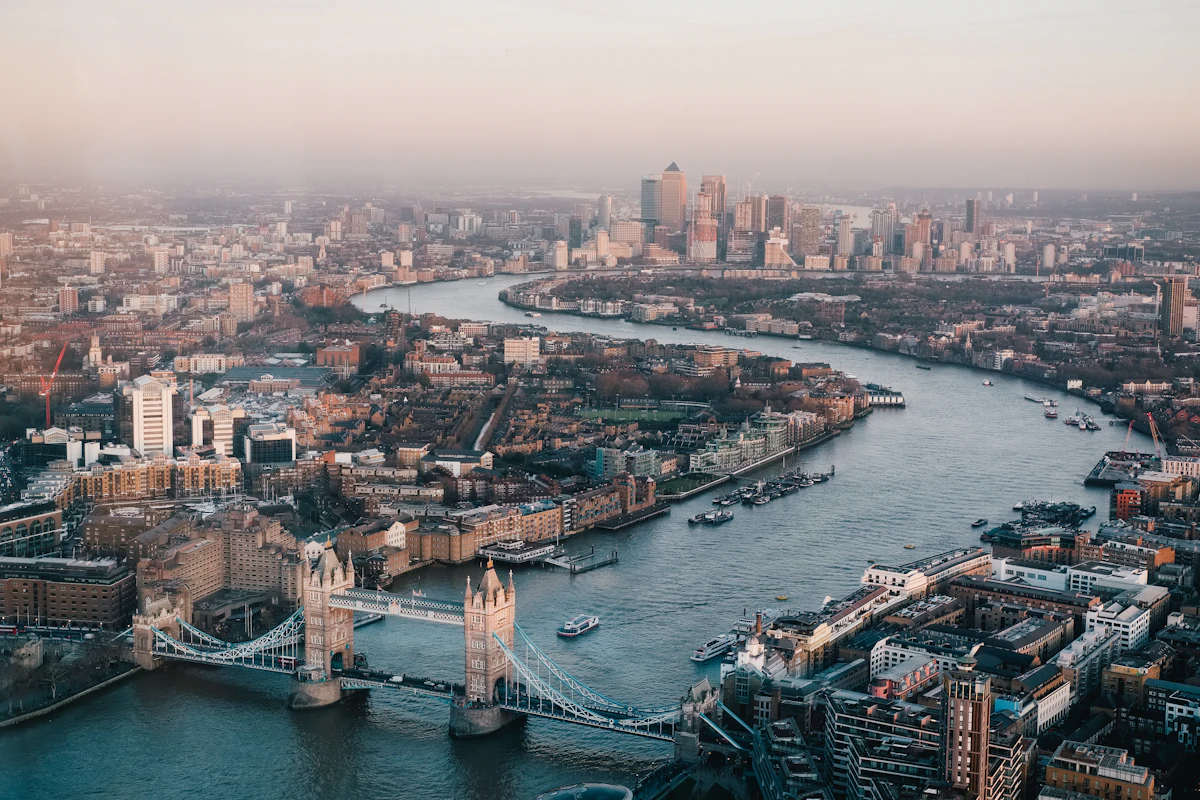
People talk about London like it is a single buyer. It is not. The City and Canary Wharf are a regulated finance market that responds to LinkedIn, sponsored research, and trade press. Soho and Shoreditch are creative led, where the agency reel matters more than the case study spreadsheet. The West End is a retail and hospitality market where the difference between a profitable Christmas and a bad one is geo targeted local SEO and OOH near tube stations. South Bank and Bermondsey have a quieter B2B SaaS scene. Stratford, Wembley and the outer boroughs are mostly local services, where Google Local Service Ads still beat almost everything. Selling the same playbook to all six is the most common mistake we see in 2026.
The buyer mood is also different from New York. Londoners are more polite, but slower to sign and more careful with budget commitments after the 2024 rate cycle. A typical London marketing director will sit through three pitches before short listing two and asking each for a paid one month sprint. That sprint is where contracts are won or lost, and most agencies under invest in it because the unit economics are thin.
Digital marketing in London: what is working in 2026
Fintech is the loudest London category. Open banking is mainstream, embedded finance is mainstream, and competition for the same Chartered Accountant and SME finance director audience is brutal. The pattern that works is sponsored long form content on Sifted and Finextra, paired with LinkedIn Conversation Ads to the exact ICP and a Google Ads layer on extremely tight commercial keywords. Programmatic display is mostly waste, with two exceptions: high index publisher direct buys around Financial Times and Economist, and a tightly geo fenced retargeting layer for events.
| London sector | CAC band (GBP) | Best 2026 channel mix | What stopped working |
|---|---|---|---|
| Fintech and B2B SaaS | 240 to 680 per qualified lead | LinkedIn plus trade press plus paid search | Cold email at volume |
| D2C retail and beauty | 28 to 75 | Meta plus creator UGC plus TikTok | Affiliate networks at scale |
| Hospitality and West End retail | 9 to 22 per visit | Local Service Ads plus TfL OOH plus local SEO | Untargeted Instagram boosts |
| Property and proptech | 180 to 480 | Rightmove direct plus content SEO | Generic display retargeting |
| Professional services | 320 to 720 | Branded SEO plus thought leadership | Press release distribution |
Why a senior India team works well for London buyers
The time zone is the cleanest in our portfolio. London is GMT or BST, India is IST, the gap is four and a half or five and a half hours. Our senior strategists in Mumbai and Bengaluru start their day around 9 am IST, which is 4:30 am London. By the time the London team is at their desk at 9 am, the daily build is already pushed and the dashboard is current. We hold weekly calls between 2 pm and 5 pm London time, which is the perfect afternoon slot for IST, and email and Slack stay live until 7 pm London. That is six hours of overlap, which is more than most US east coast clients get with a Manhattan agency.
The price gap matters too. A senior strategist with ten years on agency side in London bills out at around 1,200 GBP a day. Our senior pod, which includes a strategist plus three operators, runs at the equivalent of around 400 to 550 GBP a day in retainer math. Same seniority, three times the throughput, and you actually get to talk to the person who built the strategy.
GDPR, ICO and the cookie problem
London marketing in 2026 is downstream of GDPR enforcement that finally got teeth. The ICO has been more active since 2024, and Google has tightened consent mode requirements. We treat consent mode v2 and server side GA4 as the default setup, not the optional one. We use Consent Mode and rely on enhanced conversions only inside consented audiences, and we never run untagged retargeting on UK traffic. For finance and healthcare we add a content moderation review on every ad before launch.
That privacy first analytics layer is the same approach we wrote up for Indian regulated industries in our healthcare local SEO guide and our NAP consistency audit process. Both translate cleanly to UK ICO rules.
The local SEO layer for West End and outer boroughs
Local SEO for London is dominated by tube stops, postcodes, and high street brands with too many reviews. The trick is to go deeper than "London" and target high streets directly. A Marylebone dermatology clinic ranks for "skin doctor near Baker Street" much faster than "skin doctor London". A Camden vintage shop ranks for "vintage clothing Camden Town" before it ranks for "vintage clothing London". Our team builds out neighbourhood specific landing pages and Google Business Profile posts five days a week, which is what most London agencies will not do because the writing cost is too high.
For the underlying GBP playbook, see our Google Business Profile guide, the framework is identical, only the postcodes change. For the deeper neighbourhood model, our hyperlocal content strategy applies almost without modification.
Pricing, contracts and the GBP model
We bill in GBP. A typical London senior pod runs 4,400 to 7,200 GBP a month, depending on the channel mix and whether SEO or paid is the lead motion. Fintech and proptech retainers run 7,500 to 11,000 GBP a month, because the compliance and content overhead is higher. All contracts are monthly rolling. We do not require a six month commitment, although most clients stay 14 to 18 months because the operating tempo is hard to find elsewhere.
Our London agency hub has the current pod composition and three London case studies from 2025 and 2026. The rate card sits in the pricing section, no gating.
FAQ
Are you set up for GDPR, ICO, and UK consent mode rules?
Yes. We default to consent mode v2, server side GA4 tagging, and we never run untagged retargeting on UK traffic. For finance and healthcare we add a pre launch ad review.
How does the time zone work for London?
Six clean overlap hours a day. We hold weekly calls in the London afternoon. The overnight build is ready before your team logs on, so dashboards and creative iterations are usually a day faster than with a local agency.
Which London neighbourhoods do you know best?
The City, Canary Wharf, Shoreditch, Soho, Marylebone, Camden, Bermondsey, and South Bank. For the outer boroughs we have done work in Stratford, Wembley, and Croydon, mostly for local services and retail.
Do you bill in GBP, and how are taxes handled?
Yes, GBP, monthly. We are set up to invoice through our UK partner entity which handles VAT for UK registered clients. No hidden currency conversion on the client side.
How quickly can you launch in London?
Ten to fifteen business days. The longer end is for finance and healthcare where compliance review is part of the launch checklist.
Do you do creative production or only media?
Both. We have a content and creative team that builds static, video, and long form. For high end brand films we partner with a Shoreditch studio rather than try to fake it in house.


