If you have been managing Google Ads for any length of time, you have probably stared at a Quality Score of 3 or 4 on a keyword you really care about and wondered whether it is even fixable. I have been there. In my experience running paid campaigns for Indian B2B SaaS companies, D2C brands, and service businesses across Mumbai, Bangalore, and Delhi NCR, Quality Score is the single most misunderstood metric in Google Ads - and the one with the highest ROI when you get it right.
Here is the reality most Indian advertisers miss: Quality Score is not just a vanity metric Google shows you. It is a real-time multiplier on your bid, recalculated at every auction. A keyword with a Quality Score of 9 costs roughly 50 percent less per click than one with a Quality Score of 5, all else equal. For an Indian D2C brand spending Rs. 3 lakhs a month on search, moving average Quality Score from 5 to 7 can mean Rs. 50,000-70,000 in monthly savings - or the same budget acquiring 40 percent more customers.
This guide covers exactly how Quality Score works under the hood, the three levers you control, and specific fixes I have tested across dozens of Indian accounts that reliably lift scores within 2-4 weeks.
What Google Ads Quality Score Actually Measures
Quality Score is a diagnostic tool, not a key performance indicator. Google assigns a score from 1 to 10 to every keyword in your account based on three factors evaluated relative to other advertisers competing for the same queries. The three components are: expected click-through rate (eCTR), ad relevance, and landing page experience. Each one is rated as below average, average, or above average.
Expected CTR predicts how likely someone is to click your ad when your keyword triggers it. This is based on historical CTR data for that exact keyword in your account, and Google also uses its broader knowledge of how users interact with ads in that vertical. A brand-new keyword starts with a neutral expected CTR until it gathers enough data - usually 200-500 impressions.
Ad relevance judges how closely your ad copy matches the intent behind the search query. If someone searches 'buy ergonomic office chair Mumbai' and your ad headline says 'Office Chairs - Wide Range - Best Prices' while not mentioning the city or the buying intent clearly, Google marks your relevance as below average. Tight ad groups where ad copy mirrors keyword intent are the only reliable fix.
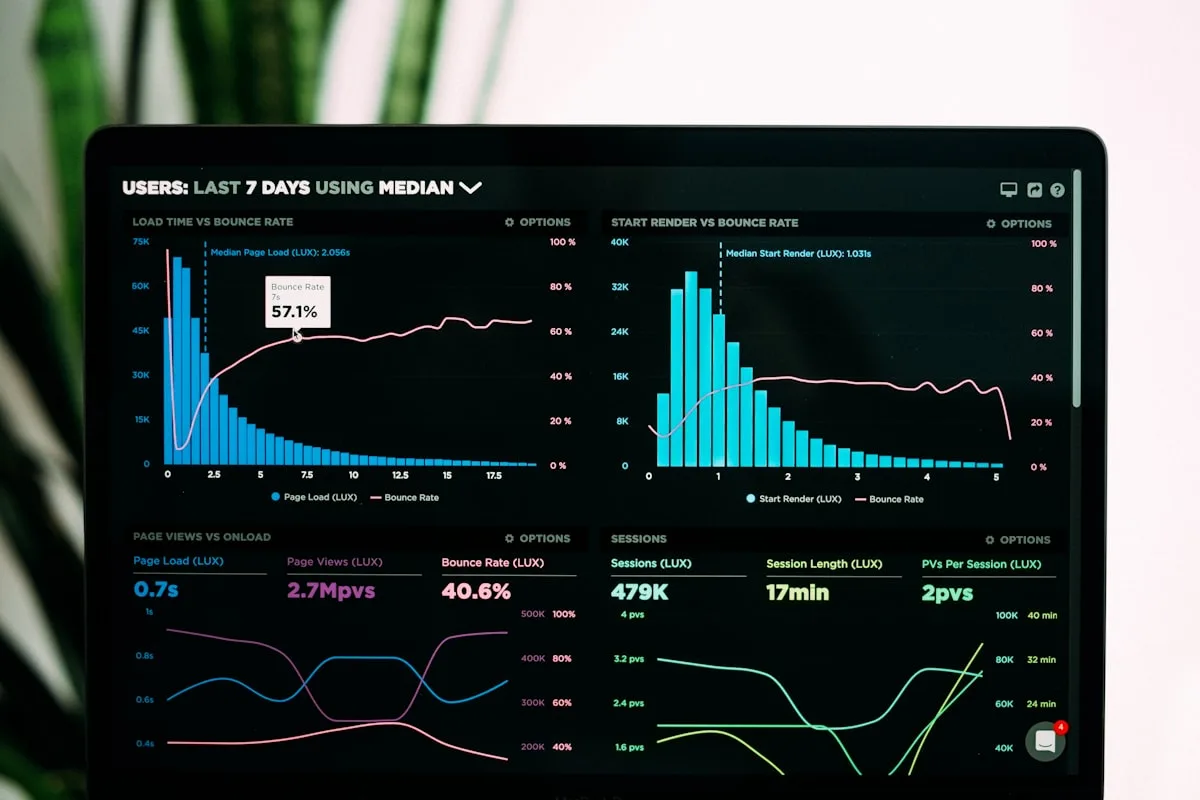
Landing page experience evaluates what happens after the click. Google looks at page load speed, mobile friendliness, content relevance to the query, ease of navigation, and whether the page delivers what the ad promised. A landing page that takes 6 seconds to load on Jio 4G in India and hides the pricing behind a form will get a below-average rating every time.
Why Quality Score Matters More in Competitive Indian Verticals
In high-competition Indian verticals like edtech, insurance, real estate, and D2C personal care, the difference between a Quality Score of 4 and 7 can determine whether your ads show at all. I worked with a Mumbai-based online learning platform where search CPCs ranged from Rs. 80 to Rs. 400 per click. Their Quality Scores averaged 4-5. After restructuring ad groups, rewriting ads to match keyword intent exactly, and building dedicated landing pages, we moved scores to 7-8 and saw CPC drop to Rs. 55-140 - a 35-40 percent reduction while maintaining the same impression share.
The math is straightforward. Ad Rank = Bid x Quality Score + Ad Extensions Impact. If your competitor bids Rs. 60 with a Quality Score of 8, their Ad Rank is 480. If you bid Rs. 80 with a Quality Score of 4, your Ad Rank is 320. You are paying more and losing the auction. Fixing Quality Score is the ultimate cost-efficiency lever.
| Quality Score | Typical CPC Discount vs Average | Ad Rank Multiplier | Estimated Monthly Savings (Rs. 2L budget) |
|---|---|---|---|
| 1-3 (Below Average) | +50% to +100% premium | 1x-3x penalty | Rs. 0 (paying premium) |
| 4-6 (Average) | Baseline CPC | Standard | Rs. 0 (baseline) |
| 7-8 (Above Average) | 15-25% discount | ~5x multiplier | Rs. 30,000-50,000 |
| 9-10 (Excellent) | 30-50% discount | ~8-10x multiplier | Rs. 60,000-100,000 |
Step 1: Diagnose Your Quality Score Problem Before Fixing
Before you touch anything, pull a keyword-level Quality Score report. In Google Ads, add the columns for Qual. Score, Expected CTR, Ad Relevance, and Landing Page Experience. Sort by cost descending - fix your most expensive keywords first. Look for patterns. Are most of your below-average ratings in expected CTR? That means your ads are not getting clicked enough relative to competitors. Are they in ad relevance? Your ad copy and keyword grouping need work. Is landing page experience dragging you down? That is a site-side issue.
I recently audited a Delhi-based interior design firm spending Rs. 1.5 lakhs monthly on Google Ads. Their average Quality Score was 4.2. The breakdown: 60 percent of keywords had below-average expected CTR, 40 percent had below-average ad relevance, and only 15 percent had below-average landing page experience. This told us the fix order: first ad copy and grouping, then landing pages later. We tackled the biggest problem first and saw the fastest improvement.
One trap I see Indian advertisers fall into constantly: looking only at the aggregate Quality Score number and ignoring the three components. Two keywords can both have a Quality Score of 5 but for completely different reasons. One might have great CTR but poor landing page experience. The other might have great relevance but terrible CTR. The fix for each is different. Always go component-level.
Step 2: Restructure Ad Groups into Single-Intent Themes
This is the highest-impact change you can make, and it costs nothing except time. Most Indian accounts I audit have ad groups with 30-80 keywords covering multiple intents. A single ad group might contain 'crm software', 'crm for small business', 'best crm software India', 'crm pricing', 'free crm', and 'cloud crm for startups'. One generic ad tries to serve all of them. Every keyword suffers from poor ad relevance.
The fix: break that ad group into 4-5 tight ad groups, each with 10-15 keywords sharing identical intent. For instance, an informational group with 'best crm software India', 'top crm tools', 'crm comparison' gets an ad that says 'Compare the Best CRM Software - See Top 10 Reviews'. A commercial-intent group with 'crm software pricing', 'crm cost per user', 'cheap crm for small business' gets an ad that says 'CRM Pricing 2026 - Plans Starting at Rs. 499/mo'. A transactional group with 'buy crm software', 'crm free trial', 'crm demo' gets a different landing page entirely.
I have seen this single restructuring lift average Quality Score by 2-3 points within two weeks across accounts. It is tedious but it works every single time. Use the Keyword Planner to find intent clusters, or better yet, mine your own Search Terms report for actual query patterns.
Step 3: Write Ads That Mirror Search Intent Exactly
Once your ad groups are tight, the next lever is ad copy. Google judges ad relevance by how well your ad matches the keyword that triggered it. If your keyword is 'hrms software for 50 employees India' and your ad headline says 'HR Software for Businesses - Get a Demo', you have already lost the relevance battle before anyone clicks.
I follow a simple rule: the primary keyword or a close variant must appear in at least one headline. For the example above, Headline 1 could be: 'HRMS for 50 Employees - India's Best - Free Trial'. Headline 2: 'Payroll + Attendance + Compliance'. Now the ad directly answers the searcher's query. Google notices this alignment.
Also use all available ad assets. Responsive Search Ads with 10-15 headlines and 4 descriptions give Google more combinations to test. Pin the most important headline to position 1 if you need brand or keyword consistency, but leave other positions flexible. Ads with 8-plus headlines consistently show higher expected CTR than the minimum 3-headline ads in my accounts.
For more on writing ads that actually convert, see my guide on paid ads creative best practices for India. The combination of tight ad groups and disciplined creative testing is where real performance gains compound.
Step 4: Fix Landing Page Experience - The Hidden Score Killer
Landing page experience is the component most advertisers ignore because it requires coordination with dev teams or website changes. But it is also the component where Indian advertisers systematically underperform. Common issues I see: pages that take 5-8 seconds to load on mobile networks, content buried below the fold, missing mobile responsiveness, auto-play videos that block content, and pages that require form fills before showing any useful information.
Google's landing page evaluator checks three things in priority order: relevance and usefulness of content, transparency and trustworthiness, and ease of navigation on all devices. For relevance, your landing page must include the keyword topic prominently and deliver exactly what the ad promised. If your ad says 'Download Free SEO Checklist' and the landing page makes you fill a 15-field form before mentioning the checklist anywhere, your score suffers.
Speed matters enormously in India. A landing page that loads in 2.5 seconds on a Reliance Jio 4G connection at 8 Mbps will perform infinitely better than one taking 6 seconds. I have had clients shift from bulky WordPress landing pages to lightweight static HTML pages and see their landing page experience jump from below average to above average in under a week.
If you are running traffic to product pages, ensure the user lands on the exact product or category matching their query. For broader campaign structure advice, see how to lower your CPL on Google Ads without killing quality leads.
Step 5: Use Ad Extensions Strategically to Boost Ad Rank
Ad extensions do not directly improve Quality Score, but they increase expected CTR by making your ad larger and more useful, and they contribute to Ad Rank as a separate multiplier. In practice, ads with sitelinks, callouts, structured snippets, and call extensions consistently achieve 10-20 percent higher CTR than identical ads without extensions in my Indian accounts.
The extensions you choose should match your business model. For a service business in India, call extensions and location extensions are non-negotiable. For ecommerce, price extensions and promotion extensions drive the highest CTR lifts. For B2B SaaS, structured snippets listing features and sitelinks to case studies or pricing pages convert best. A Delhi-based SaaS client I work with saw their average CTR jump from 3.1 percent to 4.7 percent after adding 4 sitelinks, 3 callouts, 2 structured snippets, and a call extension - a 50 percent lift from extensions alone.
How Long Does It Take to See Quality Score Improvements?
Quality Score visible in your dashboard is a historical average, not a real-time snapshot. When you make improvements today, the underlying auction-time Quality Score starts improving immediately, but your visible average takes time to catch up. For completely new ad groups and keywords, you can see a Quality Score of 7-8 within the first week if you start with tight structure and good landing pages. For existing keywords with a long history of poor performance, expect 3-4 weeks of sustained improvement before the reported score rises significantly.
The key is patience and consistency. Do not restructure your account and then panic after 5 days when you do not see the number move. Monitor the component-level ratings weekly. If expected CTR and ad relevance shift from below average to average within the first two weeks, you are on track.
Quality Score by Campaign Type: Search vs Shopping vs Performance Max
Quality Score as a visible metric only exists for Search campaigns with exact, phrase, or broad match keywords. Shopping campaigns use a different ranking mechanism based on product data quality, bid, and relevance. Performance Max campaigns optimize across channels automatically and do not expose Quality Score, though the underlying principles of relevance and user experience still apply. For more on Performance Max, see my guide on Google Performance Max campaigns for Indian SMEs.
If you use Target CPA or Target ROAS bidding, Google's algorithms factor in Quality Score when predicting conversion likelihood. Improving Quality Score directly improves the accuracy of smart bidding predictions. For more on smart bidding approaches, check smart bidding strategies for Indian Google Ads accounts.
How Vedam Vision Helps
We audit Google Ads accounts for Indian and global businesses, focusing on structural fixes that improve Quality Score before touching budgets. If your account's average Quality Score is below 6 and your CPCs are climbing, the fix is usually simpler than you think. Reach out and we will run a free Quality Score diagnostic on your top 50 spending keywords.