How to Write Website Copy That Converts Visitors Into Customers

Your website can have beautiful design and excellent SEO — and still fail to generate business. The reason is almost always the same: weak copy. Website copy that doesn't clearly communicate who you serve, what you offer, and why they should choose you fails to convert even well-intentioned visitors.
This guide covers the principles and frameworks for writing website copy that turns visitors into leads and customers — without sounding like a sales brochure nobody reads.
The Copy-First Approach to Website Design
Most businesses design their website first and write the copy to fit the design. This is backwards. Copy should drive design — the words determine the structure, emphasis, and hierarchy of each page. When design happens without copy, it creates visual layouts that look good but don't say anything compelling.
Professional copywriters are often hired before or alongside web designers specifically to establish messaging hierarchy, define what each page needs to say, and determine the flow of information that guides visitors toward conversion. For smaller businesses writing their own copy, this principle translates to: draft your copy before thinking about how the page will look.
The Foundation: Knowing What Your Visitor Actually Wants
Most website copy is written from the business's perspective — what we do, our history, our team, our awards. But visitors arrive with one question: "Can you solve my problem?" Everything else is noise until that question is answered.
Before writing a word, answer these questions:
- Who is my ideal visitor and what is the one problem they most urgently want solved?
- What outcome do they want? (Not the service they want — the result they're after)
- What are their primary objections to taking action? (Too expensive? Can't trust an unknown company? Not sure if this will work for them?)
- What would make them choose me over the alternatives?
The answers to these questions should be woven into every page of your website.
Website Copy Performance by Page Type
| Page Type | Primary Job | Copy Priority | Key Elements |
|---|---|---|---|
| Homepage | Clarify who you serve and establish relevance | Hero headline, social proof, navigation to next step | Hook, value prop, trust signal, CTA |
| Service/Product page | Convert interest into intent | Benefit-led description, objection handling, proof | Benefits, testimonials, FAQ, CTA |
| About page | Build trust and human connection | Story, values, team humanity | Origin story, mission, faces |
| Contact/Landing page | Convert intent into action | Reduce friction, restate value, final CTA | Simple form, reassurance copy, CTA |
| Blog posts | Demonstrate expertise, capture search traffic | Value delivery, internal CTAs | Useful content, relevance, conversion path |
The Homepage: Your Most Important 8 Seconds
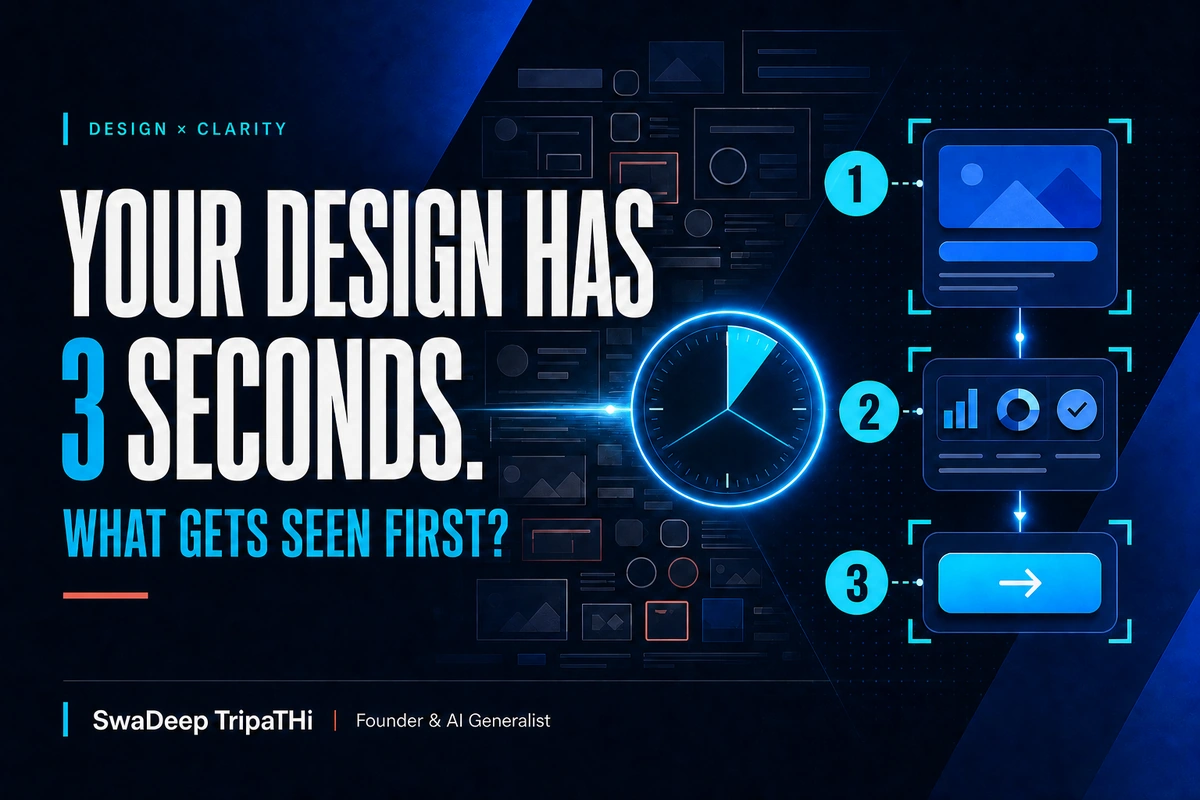
Research shows you have approximately 8 seconds to answer the visitor's key question before they leave. Your homepage hero section must immediately communicate:
- What you do: Described in terms of the outcome you deliver, not the service you provide
- Who it's for: Specific enough that the right visitors recognize themselves
- Why you: The differentiation that matters to your buyer
Compare: "We are a full-service digital marketing agency with 10 years of experience" vs. "We help Indian B2B businesses generate qualified leads through SEO and content marketing — without the guesswork."
The second version is specific, outcome-focused, and qualifies the audience. It immediately tells the right person "this is for me" and tells the wrong person "this isn't for me" — which is also valuable.
Writing Benefit Copy (Not Feature Copy)
The most common website copy mistake: describing features instead of benefits.
Feature: "24/7 customer support"
Benefit: "When something goes wrong, someone answers — day or night"
Feature: "SEO optimization"
Benefit: "Your ideal customers find you on Google before they find your competitors"
Customers buy benefits (outcomes and emotions), not features (technical descriptions). Your copy should answer "so what?" after every feature you mention.
Social Proof: Copy's Trust Amplifier
No matter how well you write your own copy, customers trust other customers more. Social proof elements to weave into your copy:
- Specific testimonials with client name, company, and measurable result
- Client count or years of experience stated as specific numbers
- Named client logos (if permitted)
- Media mentions or awards cited in context
- Review platform ratings embedded near the CTA
Place social proof closest to your CTA — this is where doubt is highest, and proof is most powerful.
Frequently Asked Questions
FAQ
Should website copy be long or short?
The right length for each page is whatever it takes to answer every question a serious prospect would have before taking action — no more, no less. Homepages and landing pages with high-value offers typically need more copy than they usually have (most are too short to handle all objections). Service pages for complex offerings need thorough copy. Contact pages and simple offer pages should be minimal. The key principle: cut everything that doesn't advance understanding or reduce objections, keep everything that does.
How do I write a tagline for my business?
A good tagline is memorable, specific, and communicates your primary value proposition in 5-8 words. Process: list your primary benefit (the single most important outcome you deliver), write 10 versions of expressing it in different ways, then apply the filter "would this make sense for only my business or could a competitor use it too?" A tagline that only makes sense for you is distinctively yours. "Vision to Value" works for a marketing agency that takes strategy to measurable results. "We Build Websites" works for nobody distinctively. Aim for specific and ownable.
How often should I update my website copy?
Review your homepage and primary service pages at minimum annually. Update whenever: your primary service offerings change, you identify objections or questions that the copy doesn't address, you collect new testimonials or case study results worth featuring, or A/B testing reveals that different copy converts better. Your About page should be updated when the team or business story meaningfully changes. Blog content should be reviewed for freshness every 12-18 months. Copy is never "done" — it's a living asset that should improve as you learn more about your audience.
How do I write my About page without it sounding like a corporate bio?
Write the About page for your customers, not about your company. The most effective About pages answer: "Why should I trust these people with my problem?" and "Are these people like me / do they understand people like me?" This means telling the story of why you started the business (what problem you saw that needed solving), who you specifically help and why that matters to you, what you believe that competitors don't, and only then, who the team are and what their credentials are. Credentials are earned after trust — trust comes from relevance and humanity first.
What's the most common website copy mistake and how do I fix it?
Leading with "we" instead of "you." Most business websites open with "We are..." or "Our team specializes in..." This immediately centers the business rather than the visitor. The fix is mechanical but powerful: rewrite every sentence that starts with "we" or "our" to start with "you" or to describe the outcome the visitor gets. "We offer 24/7 support" becomes "You get support whenever you need it." "Our team has 10 years of experience" becomes "You work with a team that's solved your specific problem before." This shift from business-centric to customer-centric copy typically improves conversion rate significantly on its own.