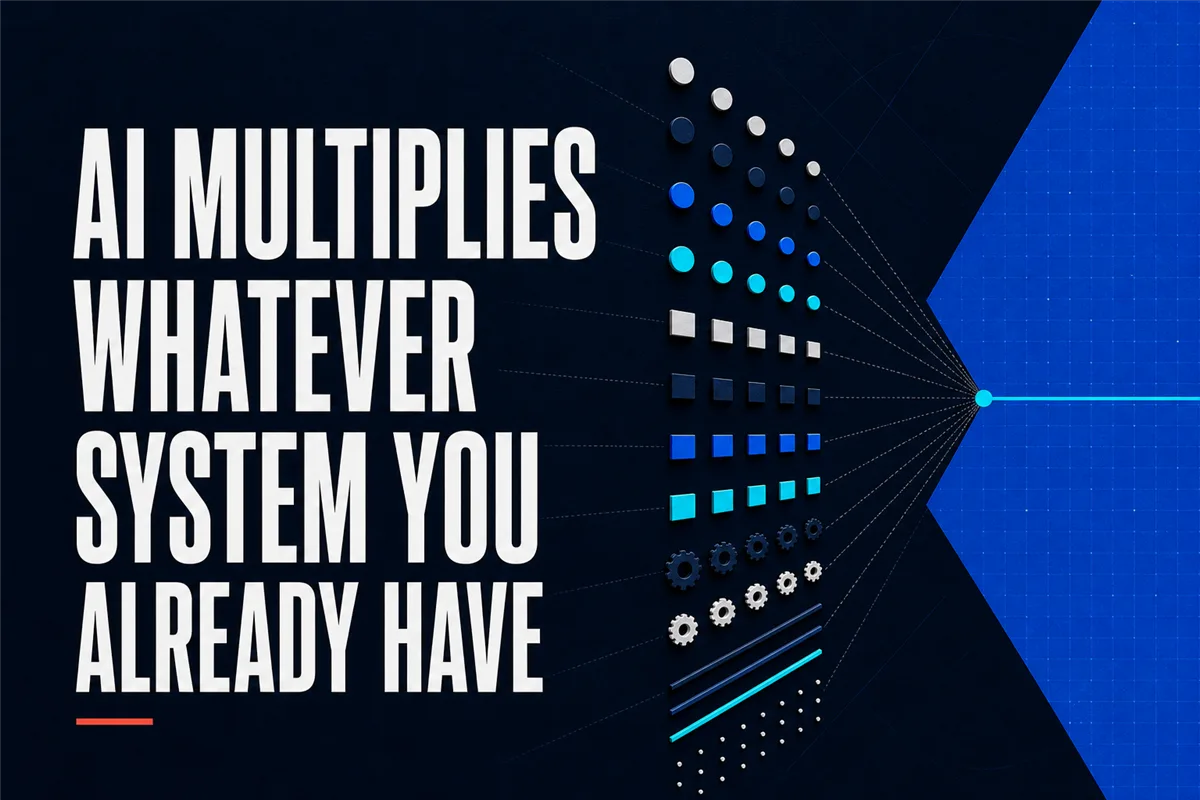
AI can multiply inconsistency as quickly as it multiplies output, so a design system must guide decisions rather than only store components. This article turns that idea into a practical operating choice for founders and small teams, using current official evidence without presenting a company forecast as a universal fact.
AI scales the rules it receives
A generative system can produce many screens, images, and layouts quickly. If the inputs contain weak spacing, unclear hierarchy, or inconsistent tokens, the system can multiply those defects just as efficiently. Speed amplifies the current system.
Figma's product work around shared components, variables, collaboration, and developer workflows reflects the value of common design infrastructure. The business benefit comes from reducing repeated decisions while keeping a coherent result across teams.
A component library is only one layer
Components describe reusable interface structures. A working design system also needs principles, tokens, content patterns, accessibility rules, governance, and examples of when not to use a component. Otherwise, people can assemble approved parts into an incoherent experience.
AI needs those extra layers even more than a skilled designer. A prompt that says 'use the design system' is vague unless the system exposes machine-readable tokens, clear component intent, and constraints for hierarchy and behaviour.
Tokens make brand decisions portable
Colour, type, spacing, radius, elevation, and motion tokens turn visual choices into named rules. Semantic names such as surface-critical or space-section communicate purpose better than raw values. They can travel between design tools, code, templates, and AI instructions.
Do not create tokens for every possible value. Start with the decisions that recur and cause inconsistency. A small, adopted token set creates more leverage than an exhaustive taxonomy that product and marketing teams bypass.
Components need intent and boundaries
Document what a component is for, which content it can hold, how it behaves across sizes, and which variants are approved. Show a counterexample. The boundary prevents AI and humans from selecting a visually similar component for the wrong interaction.
For a card, specify whether the whole surface is clickable, how long the title may be, what happens without an image, and which action is primary. These rules protect usability when generation increases the number of variants.
Governance must match production speed
A quarterly review is too slow if teams generate new patterns every day. Create a lightweight proposal path: reuse first, extend second, add new only when a real recurring need exists. Name an owner who can approve exceptions quickly.
Track where generated work escapes the system. Repeated one-off colours, spacing values, or content treatments reveal either weak adoption or a missing pattern. Feed that evidence back into the system instead of policing symptoms.
Measure coherence, not only reuse
Reuse percentage is helpful but incomplete. Measure review time, implementation defects, accessibility failures, duplicate patterns, and the number of manual corrections needed to make generated work fit the brand.
A good system lets teams move faster with fewer judgment calls while preserving a recognisable experience. If reuse is high but every release still needs extensive visual repair, the system stores components without guiding decisions.
Putting design systems in the AI era into practice
Three teams use AI to produce landing pages, sales decks, and product screens for the same brand in one week. Begin by writing the actual choice in plain language. The goal is not to document every possibility. It is to make the owner, consequence, constraint, and next action visible to the people who must execute or review the work.
Use the official source as evidence for the specific signal it reports: Figma's collaboration and product workflows position reusable components, shared variables, and connected design-to-development practices as infrastructure for consistent execution. Keep that attribution close to the claim. Do not turn a product announcement, platform recommendation, or company study into a universal prediction about every organisation.
Make the operating rule explicit: encode principles, tokens, components, content rules, and exceptions. Give the rule an exception path. Someone should know when routine execution must stop, which context must be added, and who has authority to accept a tradeoff.
Test the rule on a small but real piece of work. Use representative content and include one difficult case, because an easy example will not reveal whether the guidance survives pressure. Ask the next person in the workflow to explain the intent back in their own words.
Review reuse, defect rate, review time, and cross-channel consistency. Record the baseline, the review effort, and the reason an output was accepted or rejected. A fast first draft is not an efficiency gain if senior people spend more time repairing it or if the work weakens customer trust.
After several uses, keep the decisions that reduce confusion and remove the documentation nobody consults. Add an example only when it resolves a recurring ambiguity. The finished system should make good judgment easier, not make a small team feel as if it is operating a large compliance department.
This approach also gives AI better context. Instead of asking for generic best practice, provide the audience, source pack, rule, boundary, and acceptance test. Require the output to flag missing evidence. Human review can then focus on the decision that matters rather than cosmetic correction.
Write one short decision record after the review. Capture what the team chose, why it chose it, which evidence mattered, and what would trigger another review. This small record prevents the next project from reopening settled questions while leaving a clear path for change when the context or evidence genuinely moves.
Finally, explain the rule to someone who did not help create it. If that person cannot apply it to a realistic case, the guidance still depends on hidden context. Improve the example, boundary, or ownership until the decision can travel without requiring the founder to repeat the original conversation.
Related Vedam Vision reading
Frequently Asked Questions
What does design systems in the AI era mean in practice?
It means encode principles, tokens, components, content rules, and exceptions. The exact workflow should match the consequence, ambiguity, and reversibility of the decision.
How should a small team start?
Choose one real workflow, document the baseline, define one owner and one acceptance test, then run a contained pilot before scaling.
Where should AI be used?
Use AI for research support, drafting, comparison, transformation, and repeatable execution where sources and outputs can be reviewed. Keep human ownership for positioning, exceptions, and consequential decisions.
Which metrics matter most?
Track reuse, defect rate, review time, and cross-channel consistency. Include review effort and rework so a fast draft is not mistaken for an efficient workflow.
How do we keep the result credible?
Separate facts, assumptions, and opinions. Link factual claims to reliable sources, label uncertainty, and name the person who approves the final outcome.
The practical conclusion
AI can multiply inconsistency as quickly as it multiplies output, so a design system must guide decisions rather than only store components. The next move is small and concrete: choose one decision, expose the evidence and tradeoff, give it an owner, and review whether the outcome improved. Keep the source attached to current factual claims and keep opinion clearly framed as opinion. Revisit the rule after real use, because the purpose is not to defend the first framework. It is to help the team make a sound choice with less confusion and more accountable speed. That is how a useful idea becomes a repeatable business capability.