Quick answer
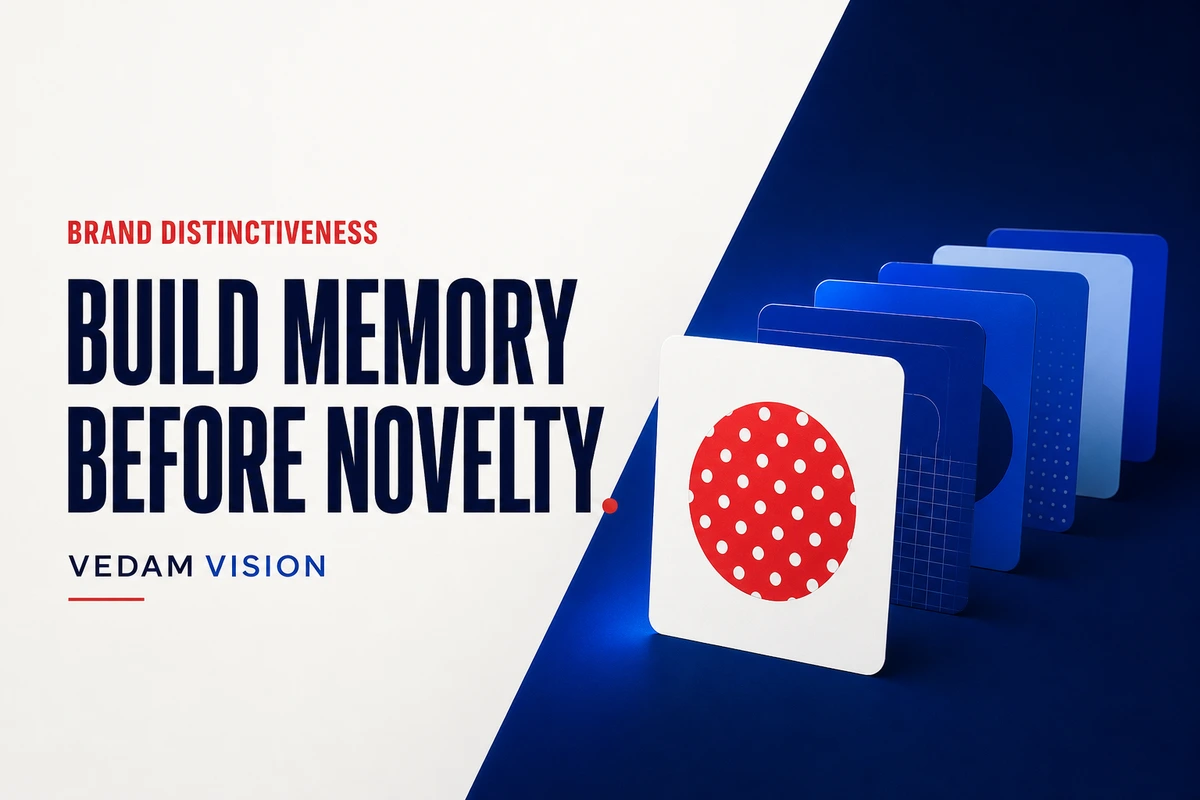
Brand distinctiveness is the ability to be recognised through consistent assets and behaviour before the audience reads the logo. Amul demonstrates this through a durable character, visual language, topical humour, product connection, and repeated cultural participation. The lesson is not to copy its mascot or puns. It is to define stable memory cues and clear creative boundaries so every new campaign feels fresh without rebuilding the brand from zero.
A brand teardown becomes weak when it begins with “I like this colour” or “the logo feels modern.”
The more useful question is: what does the audience recognise?
Amul offers an Indian case where the content has changed constantly while the memory structure has remained familiar for decades.
A system designed for variation
Amul's official topical story traces the Amul girl campaign to the 1960s and describes how the work developed a topical voice. The official Amul Hits archive catalogues campaign responses across years and subjects.
The archive is important because it shows variation at scale. Politics, sport, films, public events, and everyday conversations change. The brand does not need to redesign its identity for each topic.
Several elements provide continuity:
- the Amul girl
- a recognisable illustration language
- topical observation
- wordplay and humour
- connection to the product
- fast cultural relevance
The combination creates familiarity even when the subject is new.
Distinctiveness is not the same as beauty
Beauty is a judgment about appeal. Distinctiveness is a practical ability to be identified.
A beautiful campaign can disappear into a category if it uses the same photography, colours, layouts, and language as every competitor. A distinctive system may use simple elements, but those elements become strongly associated through consistent use.
This does not mean aesthetics are unimportant. Quality, clarity, and craft support trust. The priority is to make aesthetic decisions serve recognition instead of chasing novelty for its own sake.
Vedam Vision's article on logo versus brand system explains why identity extends beyond a mark into rules, applications, and repeated experience.
Stable assets create memory
A growing brand should identify what remains stable.
Possible distinctive assets include:
- a character or symbol
- a colour combination
- a typographic voice
- a recurring shape
- a photography treatment
- a sound
- a verbal pattern
- packaging structure
- a consistent point of view
No single asset needs to carry the whole brand. The combination matters.
Amul's example shows how a character, tone, illustration, and topical behaviour reinforce each other. If only the subject changed and every other element changed with it, the archive would feel like unrelated advertisements.
Behaviour can be a brand asset
Brands are often discussed as visual systems. Amul also demonstrates recognisable behaviour: it responds to current culture through a particular kind of wit.
That behaviour creates expectation. People know the brand may comment on a major event. The content is not simply an isolated ad. It participates in an ongoing relationship.
A B2B company can also develop recognisable behaviour without copying consumer humour. It may consistently explain complex changes, publish transparent operating lessons, simplify industry language, or respond to customer questions with diagrams.
The behaviour should match capability and audience. A serious regulated service should not borrow a playful tone merely because it attracts attention.
Build constraints before campaigns
Creative constraints help teams produce variation without losing identity.
Define:
- what must remain recognisable
- what can change by topic
- what the brand never does
- how the product or promise appears
- how the tone handles sensitive events
For SwaDeep's Founder Signal visual system, the palette, typography hierarchy, footer, and editorial quality remain stable. Metaphor, composition, crop, texture, and light rotate. That is the same underlying principle: stable memory cues with controlled freshness.
Constraints are not a lack of creativity. They give creativity a field to play within.
The no-logo recognition test
Remove the logo from a recent campaign and ask whether a relevant customer can still identify the brand.
Look at:
- colour
- type
- composition
- image treatment
- voice
- recurring object or shape
- product presentation
- point of view
If the work becomes anonymous, the brand may rely too heavily on the logo.
Do not expect immediate recognition from a new identity. Memory requires consistent exposure. The test is a direction, not proof after one campaign.
The category camouflage test
Place the brand beside five competitors and cover the names.
Does every company use the same blue gradient, smiling team, generic innovation language, and rounded interface card?
Category cues can help people understand what kind of business they are seeing. Complete imitation creates camouflage.
Choose where to meet expectations and where to become recognisable. A financial company may keep navigation familiar while using a distinctive illustration and verbal system. A food brand may preserve product clarity while owning a character and tone.
The variation test
A brand system should handle different situations without breaking.
Test it across:
- announcement
- educational content
- product explanation
- crisis or sensitive message
- recruitment
- small mobile format
- long-form article
- physical application
Amul's archive contains decades of topical subjects, which makes the system's range visible. A small brand can simulate range before launch with six or eight realistic applications.
The cultural relevance test
Topical content creates opportunity and risk.
Ask:
- Is the event appropriate for brand participation?
- Does the idea add insight or merely borrow attention?
- Could the humour harm people affected by the event?
- Is the reference accurate and timely?
- Does the brand have permission or rights for the material used?
- Can the team publish while the topic is still relevant?
Amul's history includes bold commentary and, according to its official story, moments of negative reaction. A modern brand should learn from the durability of the system without assuming every topical response is safe or suitable.
Distinctiveness for an Indian SME
A smaller business does not need a famous mascot.
It can build recognition through a compact system:
One visual anchor
Choose a recurring shape, frame, object, or image treatment.
One clear palette
Use a dominant combination consistently enough to become familiar. Do not change colours for every trend.
One typographic hierarchy
Define display, heading, body, and label roles. Keep them readable across website, social, proposal, and presentation work.
One verbal behaviour
Decide how the brand explains, challenges, reassures, or teaches. A tone is more useful when connected to a behaviour.
One proof habit
Use a consistent way to support claims: demonstrations, sources, process views, customer evidence with permission, or product detail.
This is enough to begin building memory.
Avoid copying the surface
The wrong lesson from Amul is “create a cartoon character and make puns about the news.”
Those are surface features connected to Amul's history, product, audience, and long repetition. Copying them would not transfer the association.
Study the system underneath:
- recognisable assets
- repeated behaviour
- cultural responsiveness
- product connection
- controlled variation
- long-term consistency
Then build original assets from the truth of your own business.
Measure recognition, not only engagement
Engagement can show that one post attracted response. Brand measurement should also ask whether people remember and identify the business.
Useful signals include:
- unaided or aided recognition research
- direct traffic and branded search
- customers mentioning a recurring asset or idea
- consistent association with a category or point of view
- performance of familiar formats over time
Small businesses can use customer interviews and sales conversations before they can fund formal brand studies. Ask what people remember, not only what they liked.
Vedam Vision's article on why brand presence matters more than perfect polish makes a related point: repeated, coherent presence can build more commercial memory than occasional perfection.
Give new ideas a familiar home
Amul's topical archive shows that freshness and consistency are not opposites.
The topic can change. The cultural moment can change. The execution can change. Recognition survives because stable assets and behaviour give every idea a familiar home.
Before asking whether the next campaign is beautiful, ask whether it strengthens memory. Before redesigning, ask which elements customers already recognise. Before joining a trend, ask whether the brand can respond in its own voice.
Distinctiveness is not a single clever launch. It is a system repeated with enough discipline to become familiar.
Frequently asked questions
What is brand distinctiveness?
Brand distinctiveness is the ability to be recognised through assets and behaviour such as colour, shape, character, type, voice, or presentation, even before the logo is read.
What can small businesses learn from Amul?
They can define stable memory cues, allow controlled variation, build a recognisable behaviour, and connect topical creativity back to the product or promise.
Is a mascot necessary for recognition?
No. Recognition can come from a combination of colour, typography, layout, image treatment, language, sound, packaging, or consistent behaviour.
How can a brand stay fresh without changing identity?
Keep core assets stable and rotate topic, metaphor, composition, format, crop, and story within clear boundaries.
How should brand recognition be measured?
Use customer interviews, aided and unaided recognition, branded search, direct traffic, sales feedback, and repeated association with distinctive assets or ideas.